E4C - Green IT Summer School 2026

The Green IT – Summer School 2026 is an international training program dedicated to sustainable computing, responsible digital technologies, and energy-efficient systems. It brings together scientific experts, academic researchers, and industry professionals to share current knowledge, research advances, and best practices in Green IT.
This Summer School is designed for students and industry professionals who wish to strengthen their skills in sustainable cloud computing, responsible data centers, eco-designed software, and green artificial intelligence, and to actively contribute to the ecological transition of the digital sector.
Students registrations closed
We would like to inform you that registrations for PhD students are now closed. Selected participants have received a confirmation email.
Open "non-student" registrations
Registrations for industry professionals are now open.
Participation fees and lunches are fully covered by E4C. Travel, accommodation, and personal expenses remain the responsibility of participants.
• Dates: June 22–26, 2026
• Location: École Polytechnique
• Working language: English
• Application period: March 16 to April 30, 2026
Financial Support
For selected students, the following expenses are fully covered by the E4C Center:
• accommodation
• meals
• registration fees
Expenses related to the participation of industry professionals are not covered and must be paid by their organization.
Certificate
An official certificate of training hours will be issued to students based on the number of hours attended.
Questions?
You may contact: martina.andrade@ip-paris.fr
Participating in the Green IT – Summer School 2026 will allow you to:
- Deepen your knowledge of sustainable computing and responsible digital technologies.
- Understand the environmental, energy, and societal challenges associated with digital technologies.
- Learn methods for measuring and assessing the environmental impacts of digital systems.
- Develop practical skills in eco-design of software, sustainable cloud computing, and Green AI.
- Benefit from the expertise of nationally and internationally recognized speakers.
- Join an international network of students, researchers, and professionals.
- Enhance your academic profile and your engagement in the ecological transition of the digital sector
This program encourages interdisciplinary exchanges and dialogue between academia and industry.
The Summer School will focus on the following themes:
- Green IT and responsible digital technology challenges
- Measurement and assessment of environmental impacts
- Sustainable cloud computing and data centers
- Eco-design of software and Green Coding
- Green artificial intelligence (Green AI)
These topics will be addressed from scientific, technical, and practical perspectives.
Warning: the program is still under development, modifications may occur
| Monday, June 22nd | Morning : Visit of the E4C Living Lab Afternoon: Introduction (Adel NOUREDDINE ; Sophie CHABRIDON) Challenges of Green IT (Marceau COUPECHOUX) |
| Tuesday, June 23rd | Measurement and evaluation of impacts (Adel NOUREDDINE ; Adrien CASSAGNE) |
| Wednesday, June 24th | Cloud and data centers (Rabih BASHROUSH ; Jean-Marc MENAUD) |
| Thrusday, June 25th | Green coding practices Olivier LE GOAËR ; Christophe CERIN) |
| Friday, June 26th | Green AI (Anne-Laure LIGOZAT) Conclusion |
The Green IT – Summer School 2026 will host speakers from diverse backgrounds: lecturers, researchers, and professionals recognized in the fields of sustainable computing, Green IT, cloud computing, and digital infrastructure.
These experts are affiliated with universities, research centers, specialized associations, and international companies across France and Europe.
Université Paris Nanterre, LIP6 laboratory, Paris, France | Prof. Adel Noureddine is a Full Professor of computer science at University Paris Nanterre, France. He holds a PhD in computer science from the University of Lille and Inria in 2014, and has worked in computer science in France and the UK, and in the private and public sector. His research activities cross the domains of software engineering and cyber-physical systems, in the context of sustainable computing & Green IT. He focuses on the design and optimization of intelligent, autonomous, adaptive, and sustainable ecosystems. His research is structured around two key axes: the adaptability of autonomous systems and software based on environmental criteria, and the integration of humans in improving environmental impacts. This involves observing, understanding and acting towards sustainability across software, hardware and human dimensions. He co-founded the Green IT Summer School in 2021 and he is co-piloting it since. |
Dr. Olivier Le Goaer is an Associate Professor in Computer Science at the University of Pau et des Pays de l'Adour (in french), an institution actively committed to the ecological transition. Holder of a PhD obtained from the University of Nantes in 2009, he leads the software engineering team at the computer science laboratory. His research focuses on Green Software Engineering. He is the main creator of several tools for software practitioners, including Creedengo (formerly ecoCode), Green CodeQL, and PowDroid. He is a co-founder and co-chair of the Green IT Summer School since its creation in 2021. He also co-chairs the Green Code Initiative, a non-profit organization dedicated to promoting green coding. | |
Professor, IMT Atlantique, LS2N, Nantes, France | Jean-Marc Menaud is a professor at IMT Atlantique and member of the LS2N/Inria STACK team. His main interests are related to operating system and distributed systems. He serves on several PCs in the Cloud and Energy-aware computing area. From 2022, he has been the deputy Director of the Laboratory of Digital Sciences of Nantes (LS2N) UMR CNRS 6004. His researches focus on energy aware distributed systems, in particular on workload placement, scheduling and renewable energies in datacenters. In this context, he proposed dynamic consolidation systems for virtualized environment using the constraint programming approach. He is a co-founder and co-chair of the Green IT Summer School since its creation in 2021. |
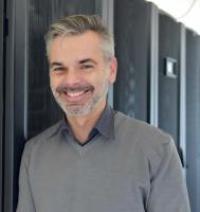
LIP6, Sorbonne University, CNRS, UMR7606, Paris, France | Since 2021, he holds an Associate Professor position (Maître de Conférences in french) at Sorbonne University (Paris, France). For his research work, he is attached to the LIP6 laboratory (Laboratoire d'Informatique de Paris 6 ) in the ALSoC (Hardware and Software for Embedded System) team.
|
Université Sorbonne Paris Nord, Villetaneuse, France | Christophe Cérin has been a professor of computer science at Sorbonne Paris Nord university since 2005, specializing in high-performance computing, particularly distributed computing, cloud computing, and edge computing. He develops middleware, algorithms, and tools for managing distributed systems and studies the environmental impact of digital technologies. As a member of the IEEE, he received the IEEE Technical Committee's Research Innovation Award on cloud computing in 2020. He served on the editorial board of the journal IEEE Transactions on Computers and is an associate editor of Springer's Journal of Cloud Computing. Since September 2021, he has also been conducting research at the University of Grenoble Alpes within the Edge Intelligence program and the INRIA Datamove team, where he focuses on the environmental impact of digital technologies. He recently led the FogSLA project on cloud fog orchestration and has industrial experience gained through the Wolphin, Wendelin, and Resilience projects, which are related to cloud computing and big data. |
University of East London, United Kingdom & CEO at LTA | Professor Rabih Bashroush is Professor of Digital Infrastructure. Currently, his main interest is in the design and implementation of energy efficient systems, especially in Cloud and data centre environments. Professor Bashroush provided strategic advisory to public and private sector IT Infrastructure transformation projects covering: consolidation, cloud adoption, resiliency and sustainability. He was named in the UK Universities top 100 Best Breakthrough list for his work on energy conservation in ICT and was the recipient of the Industry Initiative of the Year DCD Global Awards 2018. He led European initiatives such as EURECA and the European Commission DG CONNECT SmartCities research cluster. Professor Bashroush advised and supported various governments including the UK, Ireland, and the European Commission. He serves on the IT infrastructure standardisation committees for CEN/CENELEC/ETSI as well as ISO/IEC and his work has influenced several international policies and legislation (e.g. GPP, EMAS, EcoDesign, …). Professor Bashroush has published over 100 scientific papers. |
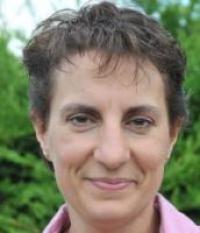
Professor, ENSIIE, LISN, University Paris-Saclay, France | Anne-Laure Ligozat is a professor of computer science at ensIIE (École Nationale Supérieure d'Informatique pour l'Industrie et l'Entreprise) and LISN (Laboratoire Interdisciplinaire des Sciences du Numérique) in the Paris region. Her research focuses on the environmental impacts of digital technology, particularly artificial intelligence. |
Professor, Télécom Paris, LTCI, Palaiseau, France | Marceau Coupechoux is a Professor at Télécom Paris in the RMS Team, where he is researching on cellular networks, wireless networks, ad hoc networks, cognitive networks, Internet of Things, focusing mainly on performance evaluation, ptimization, and resource management. He is also a Lecturing Professor at the École Polytechnique. From 2000 to 2005, he was with Alcatel-Lucent (now Nokia Bell Labs) with the Research and Innovation and then with the Network Design Department. He was a Visiting Scientist with the Indian Institute of Science, Bengaluru, India, from 2011 to 2012. |
Students
30 places are reserved for students enrolled in:
- Master’s programs
- PhD programs
- Postdoctoral positions
Prerequisites:
- Basic computer skills
- Intermediate level of programming knowledge (any programming language)
Selection will be based on application review.
Selection timeline:
- Application opening: March 16, 2026
- Application deadline: April 30, 2026
- Jury deliberation: May 4, 2026
- Announcement of results: May 6, 2026
Registration, accommodation, and meal costs for selected students are fully covered by the E4C Center.
Professionals
Places are reserved for professionals, particularly from industry, digital services, and consulting firms. The final number of places will be announced later.
Participation costs must be covered by their employer.
Registration procedures will be specified at a later date.
General Timeline
- March 16, 2026: Applications open
- April 30, 2026: Application deadline
- May 22, 2026: Announcement of selected participants
- Late May 2026: Practical information sent to participants
- June 21, 2026: Arrival of participants, check-in and welcome dinner
- June 22, 2026: Beginning of the training program
- June 26, 2026: End of the Summer School
Visa Information
International participants are encouraged to check visa requirements as early as possible in order to anticipate administrative processing times.
Location
École Polytechnique
 |
|
 |
|
 |
|
 |
|
• Dates: June 22–26, 2026
• Location: École Polytechnique
• Working language: English
• Application period: March 16 to April 30, 2026
Financial Support
For selected students, the following expenses are fully covered by the E4C Center:
• accommodation
• meals
• registration fees
Expenses related to the participation of industry professionals are not covered and must be paid by their organization.
Certificate
An official certificate of training hours will be issued to students based on the number of hours attended.
Questions?
You may contact: martina.andrade@ip-paris.fr
Participating in the Green IT – Summer School 2026 will allow you to:
- Deepen your knowledge of sustainable computing and responsible digital technologies.
- Understand the environmental, energy, and societal challenges associated with digital technologies.
- Learn methods for measuring and assessing the environmental impacts of digital systems.
- Develop practical skills in eco-design of software, sustainable cloud computing, and Green AI.
- Benefit from the expertise of nationally and internationally recognized speakers.
- Join an international network of students, researchers, and professionals.
- Enhance your academic profile and your engagement in the ecological transition of the digital sector
This program encourages interdisciplinary exchanges and dialogue between academia and industry.
The Summer School will focus on the following themes:
- Green IT and responsible digital technology challenges
- Measurement and assessment of environmental impacts
- Sustainable cloud computing and data centers
- Eco-design of software and Green Coding
- Green artificial intelligence (Green AI)
These topics will be addressed from scientific, technical, and practical perspectives.
Warning: the program is still under development, modifications may occur
| Monday, June 22nd | Morning : Visit of the E4C Living Lab Afternoon: Introduction (Adel NOUREDDINE ; Sophie CHABRIDON) Challenges of Green IT (Marceau COUPECHOUX) |
| Tuesday, June 23rd | Measurement and evaluation of impacts (Adel NOUREDDINE ; Adrien CASSAGNE) |
| Wednesday, June 24th | Cloud and data centers (Rabih BASHROUSH ; Jean-Marc MENAUD) |
| Thrusday, June 25th | Green coding practices Olivier LE GOAËR ; Christophe CERIN) |
| Friday, June 26th | Green AI (Anne-Laure LIGOZAT) Conclusion |
The Green IT – Summer School 2026 will host speakers from diverse backgrounds: lecturers, researchers, and professionals recognized in the fields of sustainable computing, Green IT, cloud computing, and digital infrastructure.
These experts are affiliated with universities, research centers, specialized associations, and international companies across France and Europe.
Université Paris Nanterre, LIP6 laboratory, Paris, France | Prof. Adel Noureddine is a Full Professor of computer science at University Paris Nanterre, France. He holds a PhD in computer science from the University of Lille and Inria in 2014, and has worked in computer science in France and the UK, and in the private and public sector. His research activities cross the domains of software engineering and cyber-physical systems, in the context of sustainable computing & Green IT. He focuses on the design and optimization of intelligent, autonomous, adaptive, and sustainable ecosystems. His research is structured around two key axes: the adaptability of autonomous systems and software based on environmental criteria, and the integration of humans in improving environmental impacts. This involves observing, understanding and acting towards sustainability across software, hardware and human dimensions. He co-founded the Green IT Summer School in 2021 and he is co-piloting it since. |
Dr. Olivier Le Goaer is an Associate Professor in Computer Science at the University of Pau et des Pays de l'Adour (in french), an institution actively committed to the ecological transition. Holder of a PhD obtained from the University of Nantes in 2009, he leads the software engineering team at the computer science laboratory. His research focuses on Green Software Engineering. He is the main creator of several tools for software practitioners, including Creedengo (formerly ecoCode), Green CodeQL, and PowDroid. He is a co-founder and co-chair of the Green IT Summer School since its creation in 2021. He also co-chairs the Green Code Initiative, a non-profit organization dedicated to promoting green coding. | |
Professor, IMT Atlantique, LS2N, Nantes, France | Jean-Marc Menaud is a professor at IMT Atlantique and member of the LS2N/Inria STACK team. His main interests are related to operating system and distributed systems. He serves on several PCs in the Cloud and Energy-aware computing area. From 2022, he has been the deputy Director of the Laboratory of Digital Sciences of Nantes (LS2N) UMR CNRS 6004. His researches focus on energy aware distributed systems, in particular on workload placement, scheduling and renewable energies in datacenters. In this context, he proposed dynamic consolidation systems for virtualized environment using the constraint programming approach. He is a co-founder and co-chair of the Green IT Summer School since its creation in 2021. |
LIP6, Sorbonne University, CNRS, UMR7606, Paris, France | Since 2021, he holds an Associate Professor position (Maître de Conférences in french) at Sorbonne University (Paris, France). For his research work, he is attached to the LIP6 laboratory (Laboratoire d'Informatique de Paris 6 ) in the ALSoC (Hardware and Software for Embedded System) team.
|
Université Sorbonne Paris Nord, Villetaneuse, France | Christophe Cérin has been a professor of computer science at Sorbonne Paris Nord university since 2005, specializing in high-performance computing, particularly distributed computing, cloud computing, and edge computing. He develops middleware, algorithms, and tools for managing distributed systems and studies the environmental impact of digital technologies. As a member of the IEEE, he received the IEEE Technical Committee's Research Innovation Award on cloud computing in 2020. He served on the editorial board of the journal IEEE Transactions on Computers and is an associate editor of Springer's Journal of Cloud Computing. Since September 2021, he has also been conducting research at the University of Grenoble Alpes within the Edge Intelligence program and the INRIA Datamove team, where he focuses on the environmental impact of digital technologies. He recently led the FogSLA project on cloud fog orchestration and has industrial experience gained through the Wolphin, Wendelin, and Resilience projects, which are related to cloud computing and big data. |
University of East London, United Kingdom & CEO at LTA | Professor Rabih Bashroush is Professor of Digital Infrastructure. Currently, his main interest is in the design and implementation of energy efficient systems, especially in Cloud and data centre environments. Professor Bashroush provided strategic advisory to public and private sector IT Infrastructure transformation projects covering: consolidation, cloud adoption, resiliency and sustainability. He was named in the UK Universities top 100 Best Breakthrough list for his work on energy conservation in ICT and was the recipient of the Industry Initiative of the Year DCD Global Awards 2018. He led European initiatives such as EURECA and the European Commission DG CONNECT SmartCities research cluster. Professor Bashroush advised and supported various governments including the UK, Ireland, and the European Commission. He serves on the IT infrastructure standardisation committees for CEN/CENELEC/ETSI as well as ISO/IEC and his work has influenced several international policies and legislation (e.g. GPP, EMAS, EcoDesign, …). Professor Bashroush has published over 100 scientific papers. |
Professor, ENSIIE, LISN, University Paris-Saclay, France | Anne-Laure Ligozat is a professor of computer science at ensIIE (École Nationale Supérieure d'Informatique pour l'Industrie et l'Entreprise) and LISN (Laboratoire Interdisciplinaire des Sciences du Numérique) in the Paris region. Her research focuses on the environmental impacts of digital technology, particularly artificial intelligence. |
Professor, Télécom Paris, LTCI, Palaiseau, France | Marceau Coupechoux is a Professor at Télécom Paris in the RMS Team, where he is researching on cellular networks, wireless networks, ad hoc networks, cognitive networks, Internet of Things, focusing mainly on performance evaluation, ptimization, and resource management. He is also a Lecturing Professor at the École Polytechnique. From 2000 to 2005, he was with Alcatel-Lucent (now Nokia Bell Labs) with the Research and Innovation and then with the Network Design Department. He was a Visiting Scientist with the Indian Institute of Science, Bengaluru, India, from 2011 to 2012. |
Students
30 places are reserved for students enrolled in:
- Master’s programs
- PhD programs
- Postdoctoral positions
Prerequisites:
- Basic computer skills
- Intermediate level of programming knowledge (any programming language)
Selection will be based on application review.
Selection timeline:
- Application opening: March 16, 2026
- Application deadline: April 30, 2026
- Jury deliberation: May 4, 2026
- Announcement of results: May 6, 2026
Registration, accommodation, and meal costs for selected students are fully covered by the E4C Center.
Professionals
Places are reserved for professionals, particularly from industry, digital services, and consulting firms. The final number of places will be announced later.
Participation costs must be covered by their employer.
Registration procedures will be specified at a later date.
General Timeline
- March 16, 2026: Applications open
- April 30, 2026: Application deadline
- May 22, 2026: Announcement of selected participants
- Late May 2026: Practical information sent to participants
- June 21, 2026: Arrival of participants, check-in and welcome dinner
- June 22, 2026: Beginning of the training program
- June 26, 2026: End of the Summer School
Visa Information
International participants are encouraged to check visa requirements as early as possible in order to anticipate administrative processing times.
Location
École Polytechnique
|
|
|
|
|
|
|
|
Soutenu par :